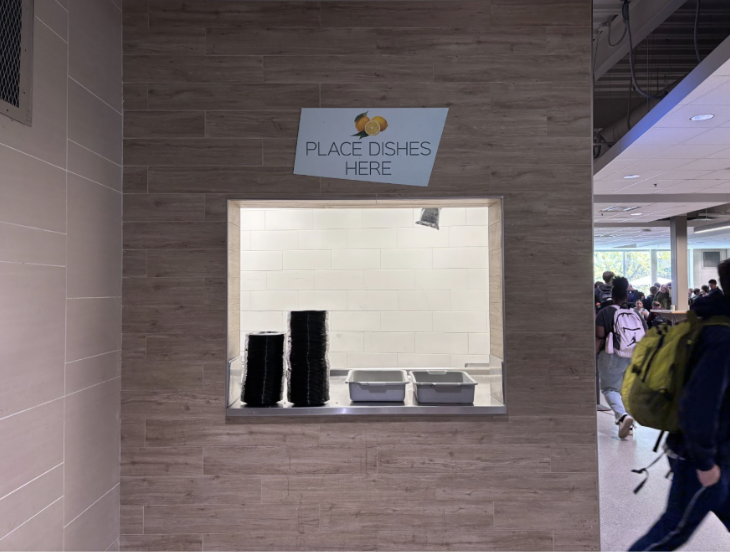
Last month, Southwest High School decided to make a massive change to school lunches. Paper plates and plastic utensils would be replaced with reusable plates and silverware. Instead of just throwing away dirty plates and utensils at the end of lunch, students are now required to drop off their plates and silverware at the newly opened dish counter.
As of October 2024, Southwest enrolls a total of 1,198 students across all grades. If every student gets a meal from the cafeteria each day of the school year (168 days), the school produces an estimated 5,325 pounds of paper waste and 887 pounds of plastic waste each year. While not everyone gets school lunch, that’s still a disturbing amount of paper and plastic waste. The dish change decision, at first glance, makes sense. With global warming worsening and the known effects of plastic pollution damaging our waterways and wildlife, reusable dishes look like the path forward. However, many students at Southwest seem to disagree.
“I hate them,” said Armetta West (‘28) sharing the sentiment of many Southwest students concerning the controversial dish change. The switch from paper plates and plastic cutlery to reusable plates and silverware has some Southwest students upset. Maryam Muhammad (‘28) is one of many students left a little nauseated at the idea. “I thought it was disgusting.”
One of the most common concerns is hygiene. Not everyone has confidence that the plates will be cleaned properly. “I liked it better before,” stated Sophie Jones (‘28). “There’s no way they can wash every single thing that well.” Another concern has to do with the environmental impact. While the change was implemented in an attempt to reduce waste, Owen Denby (‘27) felt that it would just be worse for the environment in the long run. “The change doesn’t make any sense. The plastic plates will eventually have to be thrown out, and it’s just more work for the people in the kitchen.” Another student, Eli Andrews (‘28), said that “I just wish they didn’t use black plastic for the plates, since they won’t be recycled. They’ll just have to throw it out eventually.” While they can technically be recycled, most of the black plastics that end up in the recycling facility don’t actually make it through the process. According to Eureka Recycling, the recycling vendor that Minneapolis uses, black pigment absorbs the light of lasers used to identify recyclable materials at the sorting facility, making it invisible. Since the lasers can’t see it, it isn’t identified, leading to the plastic just being thrown out.
However, there are some students in favor of the change. Addy Babler (‘28) saw the possible benefits of the switch. “I think that there are regulations on how they’re supposed to be sanitized. I do believe they will be followed. I think the slight risk of something being a little dirty is worth helping the environment.” Even though they’ll eventually be disposed of, the new plates will reduce the amount of paper and plastic waste the school produces.
Whatever your opinion on the change is, it looks like the reusable plates and silverware are here to stay. According to staff, the switch is a permanent implementation. Only time will tell the overall impact this will have on Southwest’s lunch system.